📍 Los Angeles, CA  ·  C-10 #981578  ·  EVITP #4051604☎ (818) 302-5614

Outlet & Switch Installation
in Los Angeles

Professional installation of outlets, switches, GFCI protection, dimmers, USB receptacles, and smart switches. Code-compliant, permitted work with inspection included.

At a Glance Outlet and switch installation in Los Angeles costs between $80 and $250 per unit for standard installations, with smart switches and USB outlets ranging from $150 to $400. According to the National Electrical Code (NEC 2023), all habitable rooms must have outlets no more than 12 feet apart, and kitchens require GFCI protection on all countertop receptacles.
🔌 Code-Compliant Installation
GFCI & AFCI Protection
🔧 Permit & Inspection Included
💰 $150-$500 Per Outlet/Switch

How Much Does Outlet and Switch Installation Cost in Los Angeles?

"According to Amy, founder of AMY Electric and Licensed C-10 electrical contractor with 15+ years of experience: 'The biggest mistake homeowners make is thinking any outlet replacement is a DIY job. If a 50-year-old box has brittle wiring, loose connections, or undersized wire, what looks like a $15 swap becomes a fire risk. ESFI reports that home electrical fires cause more than 400 deaths and over $1.4 billion in property damage annually in the US.'"

From standard receptacle replacement to smart home switch upgrades, AMY Electric installs outlets and switches to current NEC and LA code requirements. Every installation includes proper wiring, secure connections, and a clean, professional finish.

🔌

Standard Receptacle Installation

Replace outdated outlets with tamper-resistant (TR) receptacles. Includes proper grounding and secure wiring.

🛡️

GFCI Outlet Installation

Required in kitchens, bathrooms, garages, and outdoors. Prevents shock hazards in wet locations.

🌀

Dimmer Switch Installation

LED-compatible dimmers for ambiance control. Works with most LED fixtures and bulbs.

🔌

USB Charging Outlets

Convenient USB-A and USB-C ports built into the outlet. Charge devices without adapters.

🏠

Smart Switch Installation

Wi-Fi switches controllable via app or voice (Alexa, Google Home). No neutral wire required for many models.

🔧

3-Way & 4-Way Switching

Control lights from multiple locations (top/bottom of stairs, multiple room entrances).

📋

Outlet Relocation & Addition

Move outlets to more convenient locations or add new circuits where needed.

Outlet & Switch Installation Project Photos

Browse representative project photos from electrical work across Greater Los Angeles. Equipment and scope vary by property.
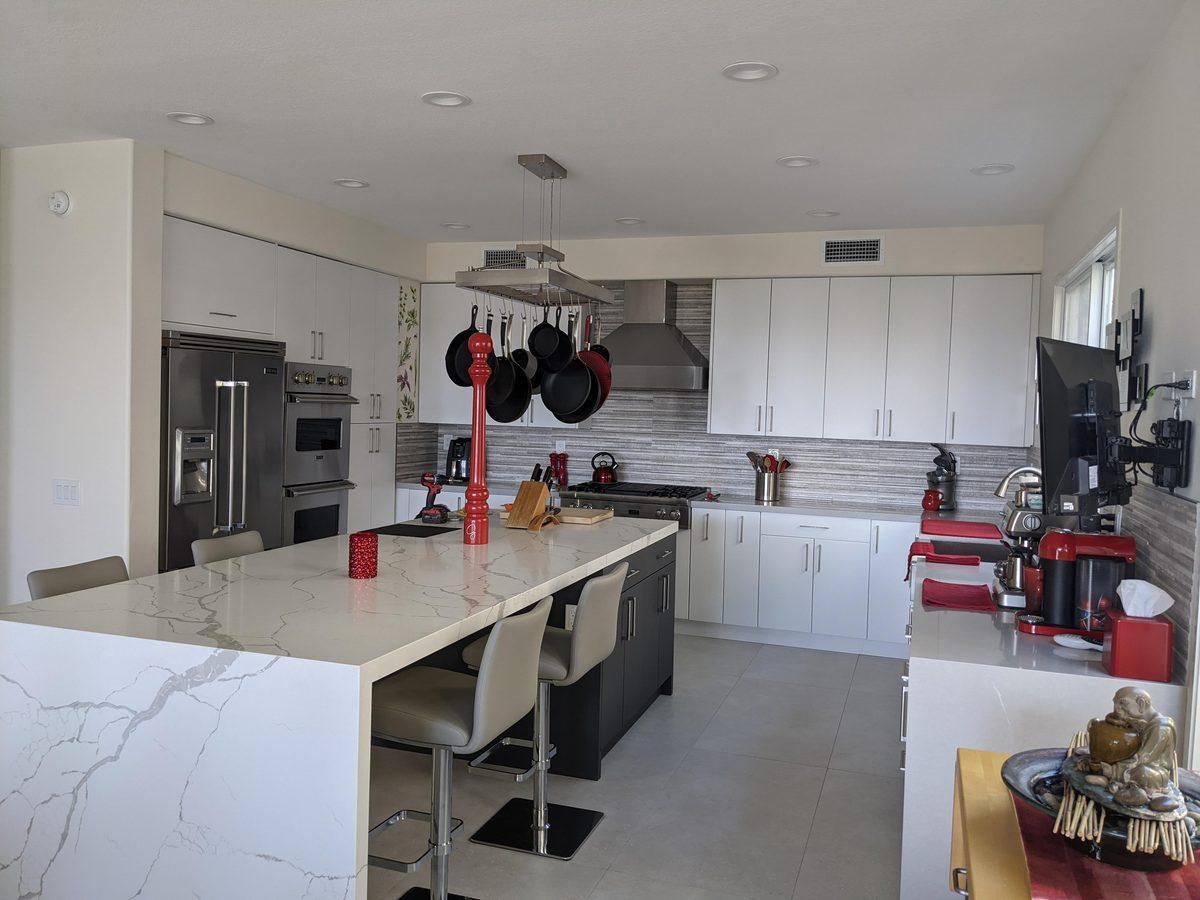
Finished kitchen with pendant light installation and modern fixtures - AMY Electric

Outlet and switch installation in kitchen remodel
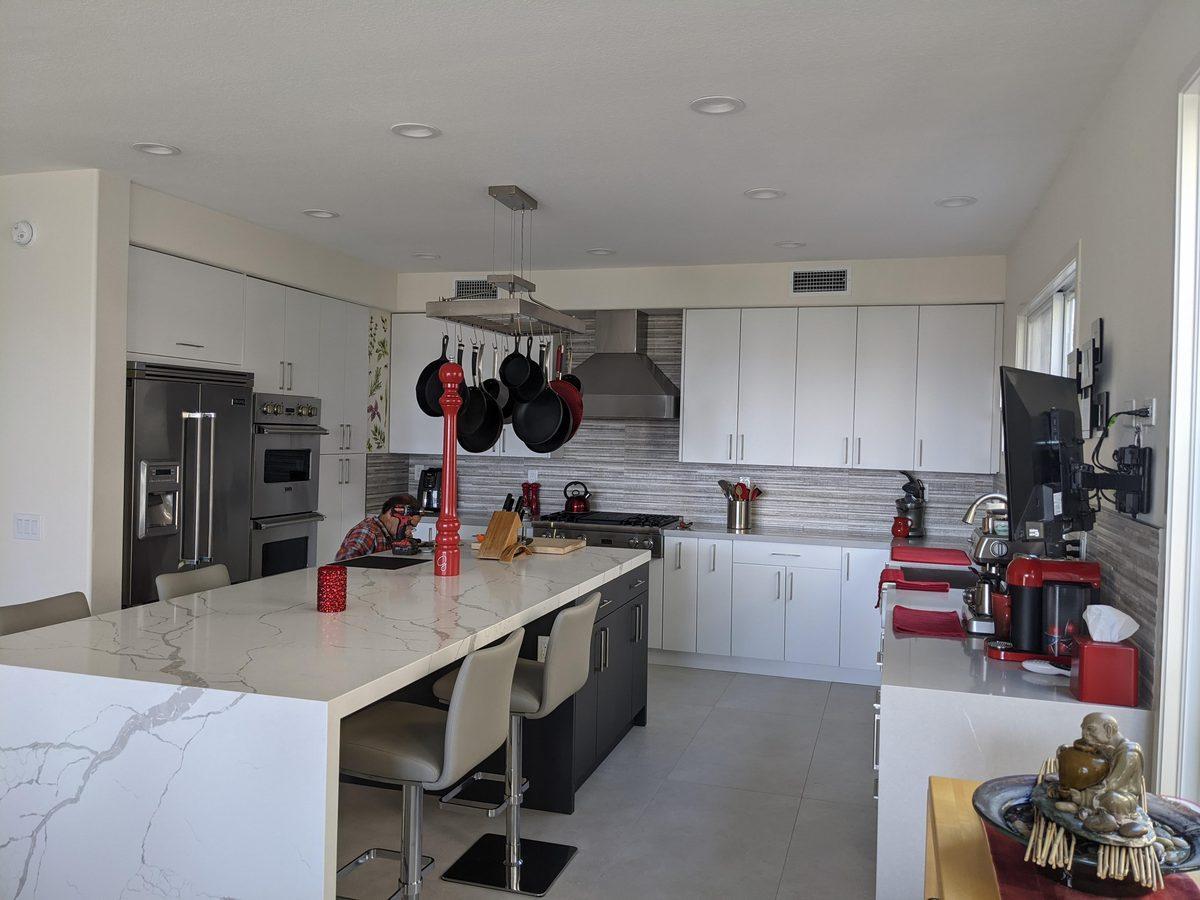
Modern kitchen lighting installation alternative view - AMY Electric

Modern kitchen with new outlets and switches

Outlet & Switch How Does Outlet and Switch Installation Work?

1
Assessment & Quote

Tell us what you need — number of outlets, switch types, locations. We provide a firm quote before any work.

2
Permit (if required)

Most outlet/switch replacements don't require permits. New circuits or panel work do — we handle all permitting.

3
Power Off & Safe Work

We shut off power at the panel, verify it's dead, and work using insulated tools and PPE.

4
Installation & Testing

Old devices removed, new ones installed with proper wiring. Every outlet/switch tested for function and polarity.

5
Cleanup & Walkthrough

We clean up debris, label any new breakers, and show you everything works before we leave.

Outlet & Switch Installation Costs

ServiceTypical Range
Standard Receptacle Installation$150–$300
GFCI Outlet Installation$200–$350
Dimmer Switch Installation$180–$320
USB Charging Outlet$220–$400
Smart Switch Installation$250–$450
3-Way Switch Installation$200–$350
Outlet Relocation (new circuit)$300–$600
Outlet Addition (existing circuit)$150–$250

Price per outlet/switch. Discounts available for multiple installations.

Outlet & Switch FAQ

Do I need a permit to replace an outlet or switch?
Replacing an existing outlet or switch with a new one of the same type using the existing wiring does not require a permit in Los Angeles. However, adding new outlets or switches, relocating an outlet to a different position, upgrading to a different type of outlet (such as changing from a standard outlet to a GFCI), or running new wiring to accommodate additional outlets does require a permit. Any modification that involves altering the existing wiring configuration, adding new wiring, or changing the circuit's capacity requires a permitted electrical inspection to verify the work meets the current California Electrical Code. The distinction between a simple replacement (no permit needed) and a new installation (permit required) is important for both safety and legal reasons. We evaluate every outlet and switch job to determine the correct permitting requirements and handle all permitting if needed.
Can I install a smart switch myself?
Installing a smart switch is more complex than many homeowners realize, primarily due to the neutral wire requirement. Most smart switches require a neutral wire at the switch box to power their Wi-Fi and wireless communication modules when the light is off. Many older Los Angeles homes, particularly those built before the 1980s, do not have neutral wires in switch boxes because older wiring methods ran only a hot switch leg to the switch. Without a neutral wire, a standard smart switch will not work at all, and attempting to install one without understanding the wiring can result in a non-functional switch, damage to the smart device, or a dead short that trips the breaker. Additional complications include box fill limits — smart switches are physically larger than standard switches and may not fit in older or smaller switch boxes — and the need to correctly identify and connect line, load, neutral, and ground wires. If you are not comfortable with basic electrical wiring, we recommend professional installation.
Why do my outlets spark when I plug something in?
A small, momentary spark when plugging in an appliance — especially one with a large power supply or motor — is typically normal and is caused by the device's capacitors charging momentarily as the contacts connect. This is the same principle as the brief spark you may see when connecting jumper cables to a car battery and does not necessarily indicate a problem. However, large, bright, or sustained sparks, sparks accompanied by a popping sound or burning smell, or sparks that occur when the plug is partially inserted and make intermittent contact are warning signs of an underlying electrical problem. Potential issues include worn or damaged outlet contacts that are not making proper connection, loose wiring at the outlet terminals causing arcing, a short circuit within the device being plugged in, or a ground fault where current is leaking to ground through moisture or damaged insulation. If you consistently see significant sparking from an outlet, we recommend having it inspected.
What's the difference between 15A and 20A outlets?
The visible difference between a 15-amp and a 20-amp outlet is the shape of the neutral slot — a 15-amp outlet has two vertical slots of different widths (hot and neutral), while a 20-amp outlet has one vertical slot and one slot shaped like a sideways T, which allows both standard 15-amp plugs and 20-amp plugs with a horizontal neutral prong to be inserted. The internal difference is that 20-amp outlets are built with heavier-duty internal contacts designed to handle higher continuous current loads. In Los Angeles homes, 15-amp outlets are standard for general-purpose circuits in bedrooms, living rooms, and hallways, while 20-amp outlets are required in kitchens, dining rooms, garages, and laundry rooms where higher-power appliances are used. It is important to note that a 20-amp outlet can only be installed on a circuit with 12-gauge wire and a 20-amp breaker — installing a 20-amp outlet on a 15-amp circuit with 14-gauge wire is a code violation and a fire hazard.
Do you install outdoor outlets?
Yes — we install weather-resistant outdoor outlets for Los Angeles homes, including standard GFCI-protected outlets for patios, decks, and general outdoor use, outlets with weatherproof while-in-use covers that protect the connection even when a plug is inserted, and outlets in specific locations such as for holiday lighting, pool and spa equipment, landscape lighting transformers, and EV charging. All outdoor outlets in Los Angeles must be GFCI-protected per the California Electrical Code, be installed in weatherproof enclosures with proper gaskets and covers, and be mounted at the correct height above grade (typically 6.5 feet or more) to protect against water intrusion and physical damage. We install outdoor outlets with proper conduit or UF-B cable buried at the correct depth (18 inches for underground wiring), sealed connections at every junction, and a dedicated circuit if the additional load requires it. We handle all permitting and LADBS inspection for new outdoor outlet installations.
How long does outlet/switch installation take?
A straightforward outlet or switch replacement — turning off power, removing the old device, connecting the new one, and testing — typically takes 15 to 30 minutes per device. Adding a new outlet or switch where none currently exists is a larger project taking 1 to 3 hours depending on the distance from the nearest power source, the construction of the walls (fishing through finished walls takes significantly longer than open attic or crawlspace access), and whether the project requires a new circuit in the panel. For a typical project adding two to four new outlets in a room with accessible attic or crawlspace above, expect 2 to 4 hours total. We always provide a detailed time estimate during your free on-site evaluation, and we work efficiently to minimize disruption to your home.

Upgrade Your Outlets & Switches Today

Get a free quote for professional outlet and switch installation in Los Angeles.

☎ (818) 302-5614 Free Estimate